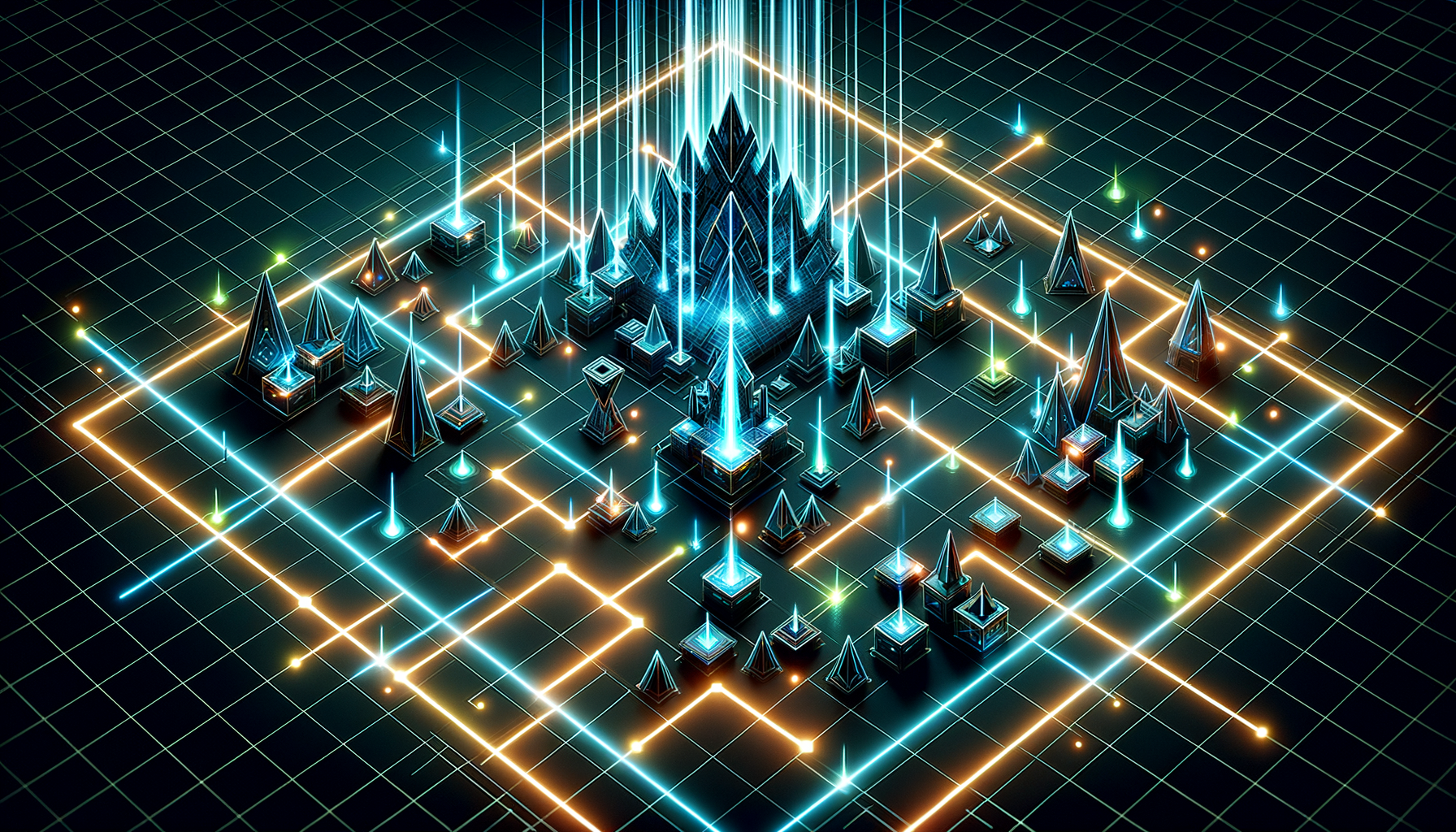
The Enduring Appeal of Tower Defense
Tower defense has been a gaming staple since Rampart (1990) and the Warcraft III custom maps that spawned the modern genre. Despite being conceptually simple — enemies walk, you build things that kill them — the best TD games contain surprising depth.
Let's break down the design patterns that separate forgettable TD games from legendary ones.
Pattern 1: The Economy Loop
Every TD game runs on the same fundamental loop:
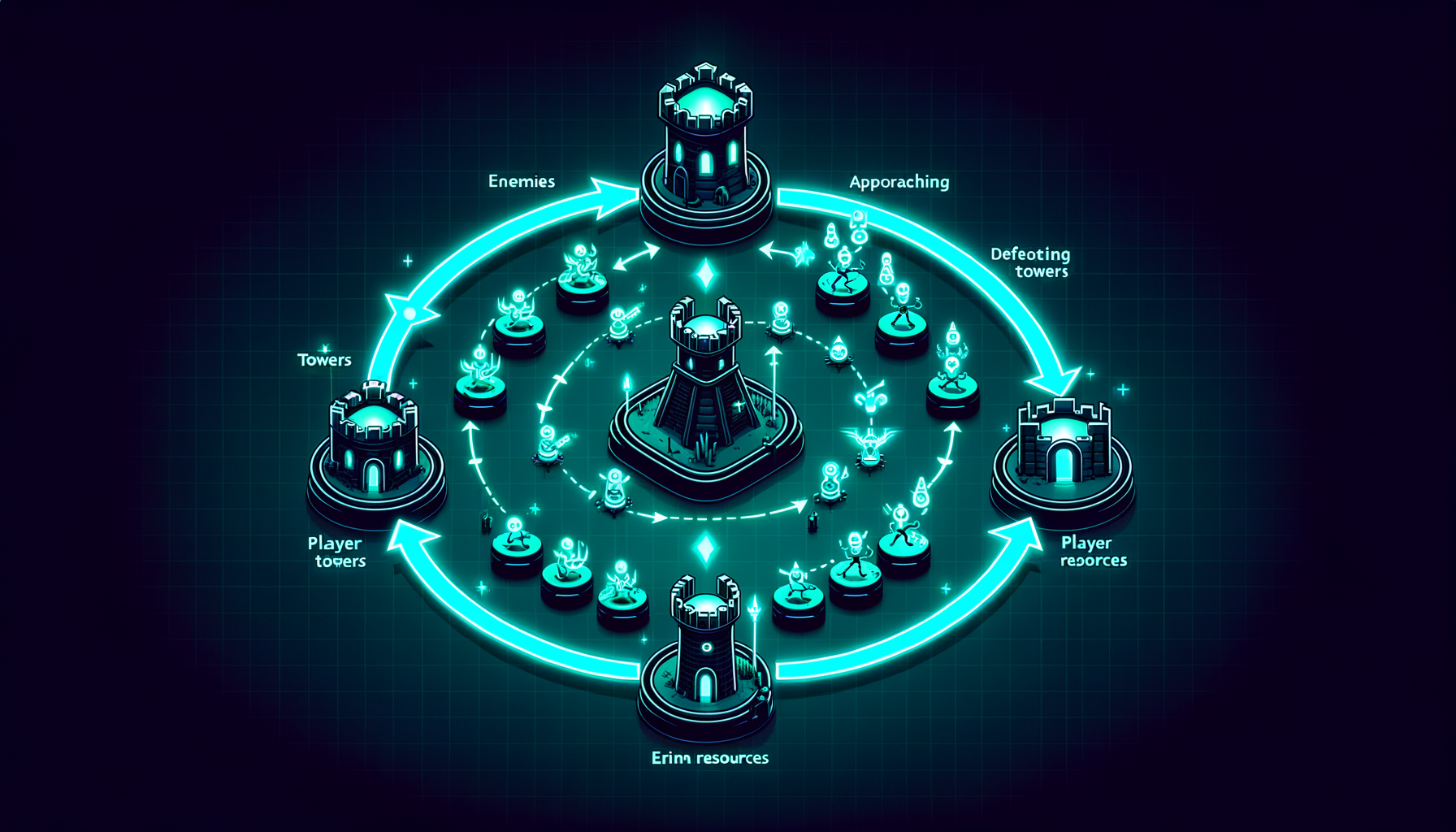
Enemies spawn → Towers kill → Resources earned → Build/upgrade → Repeat
The magic is in how each game tunes the tension within this loop:
- Too much money? Players over-build and the game becomes trivial
- Too little money? Players feel helpless and frustrated
- Just right? Every build decision feels meaningful
How B3KN Handles Economy
Beacon Defense uses an energy system instead of gold:
- Start with 10 energy, max 10
- No passive regeneration — you earn +1 per enemy kill
- Cards cost 1-5 energy
- This forces tactical decisions: save for an expensive card, or play cheap units now?
Pattern 2: Spatial Strategy
The grid is the puzzle. Great TD games make placement decisions feel like solving a spatial problem.
Fixed-Path vs. Mazing
| Approach | Examples | Pros | Cons |
|---|---|---|---|
| Fixed path | B3KN, Plants vs. Zombies | Clear strategy, accessible | Less emergent gameplay |
| Free mazing | Desktop TD, Bloons TD | Deep strategy, creative | Can be overwhelming |
| Hybrid | Kingdom Rush | Best of both worlds | Complex to balance |
Beacon Defense uses a fixed path with 2D grid placement — you can't block the path, but choosing which tiles to build on creates meaningful trade-offs between coverage and adjacency bonuses.
Pattern 3: Tower Variety & Roles
The best TD games give towers distinct roles, not just different damage numbers:
- DPS towers — high single-target damage
- AoE towers — splash damage for crowds
- Slow/CC towers — control enemy movement speed
- Buff towers — enhance nearby towers
- Economy towers — generate extra resources
B3KN's Card-Driven Approach
Instead of a fixed tower shop, Beacon Defense draws towers from your card deck:
- Units → become towers when placed on the grid
- Modules → attach to adjacent towers as upgrades
- Protocols → instant effects (damage, slow, shield)
This means every game plays differently depending on your draw. You can't always execute the same strategy — you have to adapt to what cards you get.
Pattern 4: Enemy Design & Escalation
Enemies need to force the player to adapt their strategy as waves progress:
- Wave 1-3: Basic enemies test your initial build
- Wave 4-6: Fast enemies punish pure DPS builds
- Wave 7-9: Armored enemies require specialized damage
- Wave 10+: Boss enemies with unique mechanics
Enemy Type Rock-Paper-Scissors
Basic enemies    → countered by any tower
Fast enemies     → countered by slow/CC towers
Armored enemies  → countered by high-damage single target
Boss enemies     → require combined strategy
Healers          → must be prioritized (heal other enemies)
Pattern 5: The Meta-Progression Hook
Modern TD games keep players returning through systems that persist between sessions:
- Unlockable towers/upgrades — new tools over time
- Difficulty scaling — harder modes after completion
- Collection mechanics — B3KN's card collection drives this
- Leaderboards — competitive score chasing
What Makes B3KN Different
Beacon Defense combines TD mechanics with collectible card game principles:
- Randomized loadout — your deck determines available towers
- Faction synergies — cards from the same faction combo together
- Module adjacency — spatial upgrades create build puzzles
- Deck strength rating — quantified deck power for matchmaking
- Card consumption — placed cards are gone; resource management matters
This creates a TD experience where deck building IS the meta-game and each session plays out differently based on your collection.
Experience these design patterns in action — play Beacon Defense free in your browser.