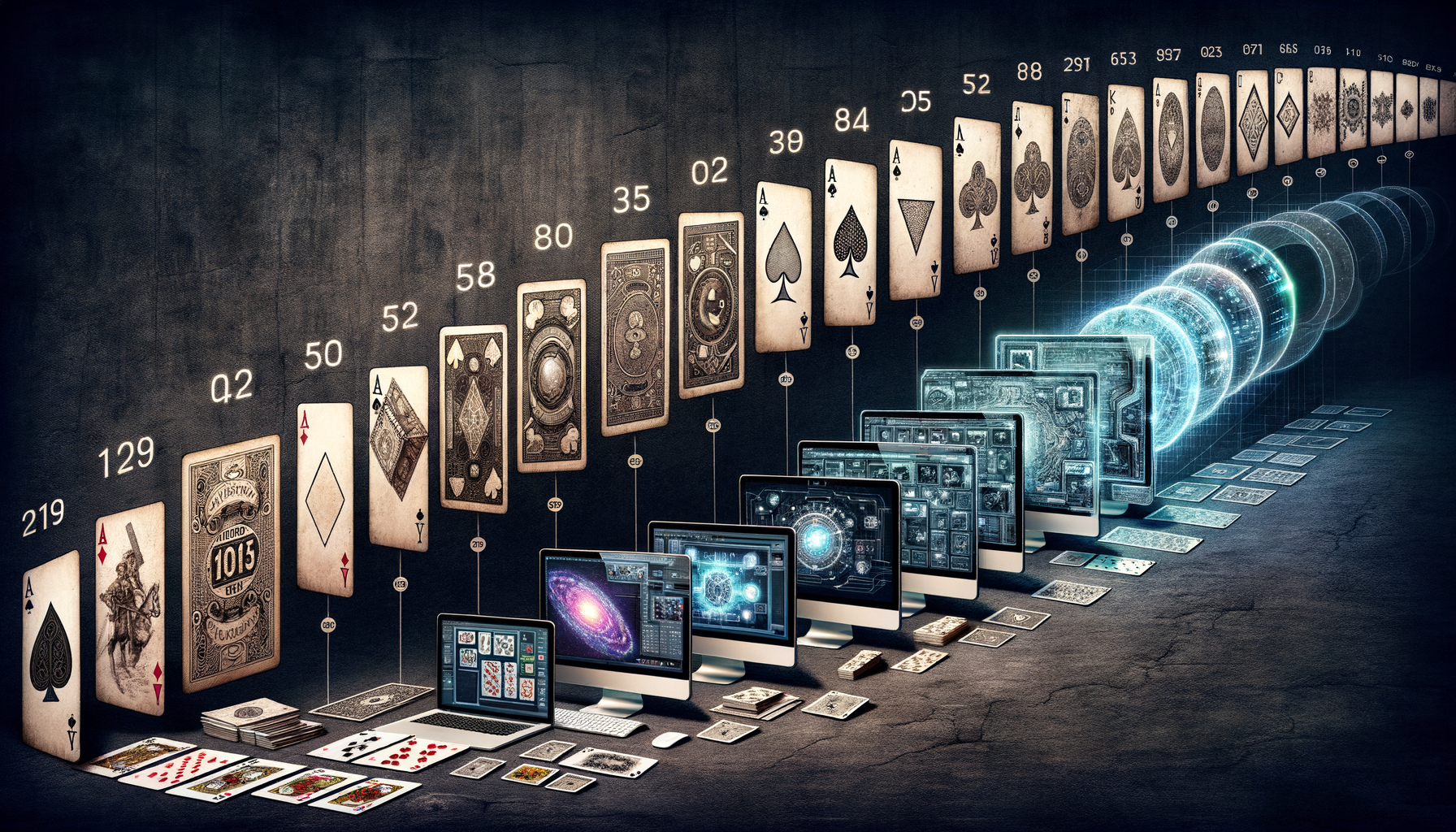
A Brief History of Digital Card Games
The Physical Era (1993–2008)
Magic: The Gathering (1993) proved that collectible card games could be a massive market. For two decades, the industry was dominated by physical cards — MTG, Pokémon, Yu-Gi-Oh — with digital versions being afterthoughts.
Digital adaptations existed (MTG Online launched in 2002), but they were clunky ports of physical rules, not native digital experiences.
The Hearthstone Revolution (2014)
Hearthstone changed everything. Blizzard proved that a card game designed for digital first could reach massive audiences:
- Free-to-play model with generous starter content
- Animations and sound that made cards feel alive
- Simplified rules that worked on mobile
- Automated rules enforcement — no judge needed
- Digital-only mechanics impossible in physical cards (random card generation, discover)
Peak concurrent players exceeded 70 million. The genre exploded.
The Expansion (2015–2022)
Hearthstone's success spawned dozens of digital CCGs:
| Game | Year | Innovation |
|---|---|---|
| Gwent | 2016 | Two-row tactical positioning |
| Legends of Runeterra | 2020 | Reactive turn structure |
| Marvel Snap | 2022 | 3-minute matches, location mechanics |
| MTG Arena | 2018 | Premium digital MTG experience |
Each game found its niche by innovating on one core mechanic while keeping the CCG foundation familiar.
What Makes a Digital CCG Successful
Analyzing the survivors (and the many failures), a few patterns emerge:
1. Accessible but Deep
The most successful games are easy to start, hard to master. Marvel Snap nailed this — games last 3 minutes, but optimal play requires deep card knowledge.
2. Generous Free-to-Play
Games that gate too much content behind paywalls lose players. The winning formula:
- Full gameplay accessible for free
- Paying accelerates collection, doesn't unlock power
- Cosmetics as primary monetization
3. Regular Content Drops
Card games need new cards to stay fresh. The industry standard is 3-4 expansions per year with 100+ new cards each.
4. Competitive Scene Integration
Ranked ladders, tournaments, and esports give engaged players a reason to optimize and keep playing.
The AI Generation
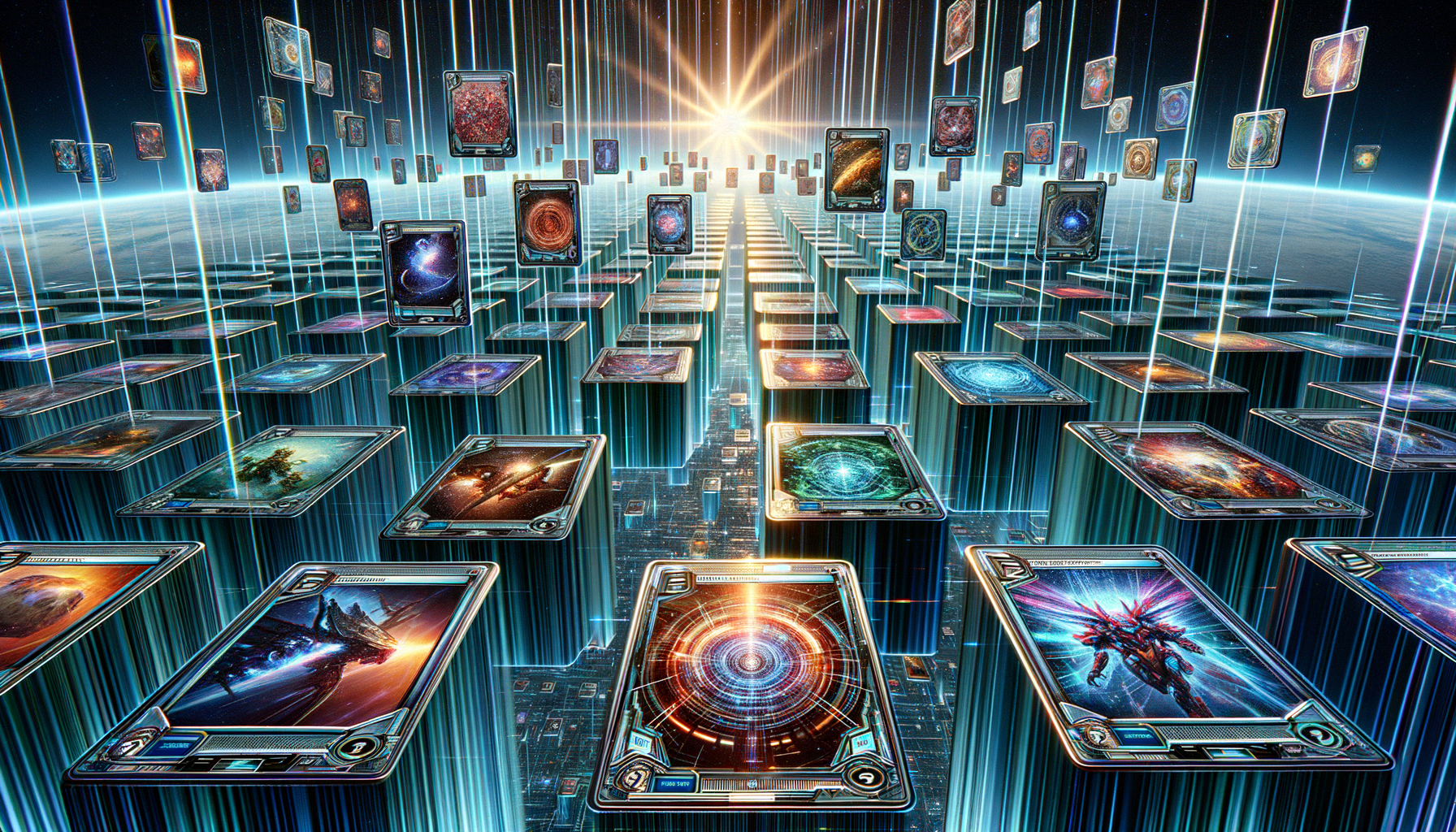
The next frontier in digital card games is AI-powered content creation:
AI Art Generation
B3KN already uses DALL-E 3 to generate unique card art. This enables:
- Rapid content creation — new cards can be visualized in minutes
- Consistent art style through tuned prompts
- Personalized variants — potential for player-customized art
AI Game Design
Beyond art, AI is being explored for:
- Card balancing — simulate millions of games to find broken combos
- Content generation — create card abilities and flavor text
- Personalized difficulty — AI opponents that adapt to player skill
- Meta analysis — identify dominant strategies and counter-plays
The Ownership Question
Digital card games face a fundamental tension: players want to own their cards, but digital goods are ephemeral. When a game shuts down, collections vanish.
B3KN approaches this through:
- Persistent collections tied to player accounts
- Card instance tracking — each card has a unique history
- Trading systems — player-to-player card exchange
Where the Industry Is Heading
Predictions for 2026–2030
- AI-native design tools will let small teams create CCGs that would have required AAA budgets
- Cross-platform play will be table stakes (mobile + desktop + console)
- Shorter match times — the Marvel Snap effect will push games toward 3-5 minute sessions
- Hybrid physical-digital — AR-enhanced physical cards that unlock digital content
- Community-generated content — player-designed cards vetted by AI balance systems
B3KN's Position
B3KN sits at the intersection of several trends:
- Card game meets tower defense — genre mashup that creates unique gameplay
- AI-generated art — enabling rapid card creation at indie scale
- Browser-based — no download barrier, instant play
- Faction-based collection — deep collection mechanics with strategic depth
The digital card game space is more competitive than ever, but there's room for games that find fresh genre combinations and leverage new technology.
Explore B3KN's card collection and see AI-generated art in action — browse the card database.