
What Is the Beacon Network?
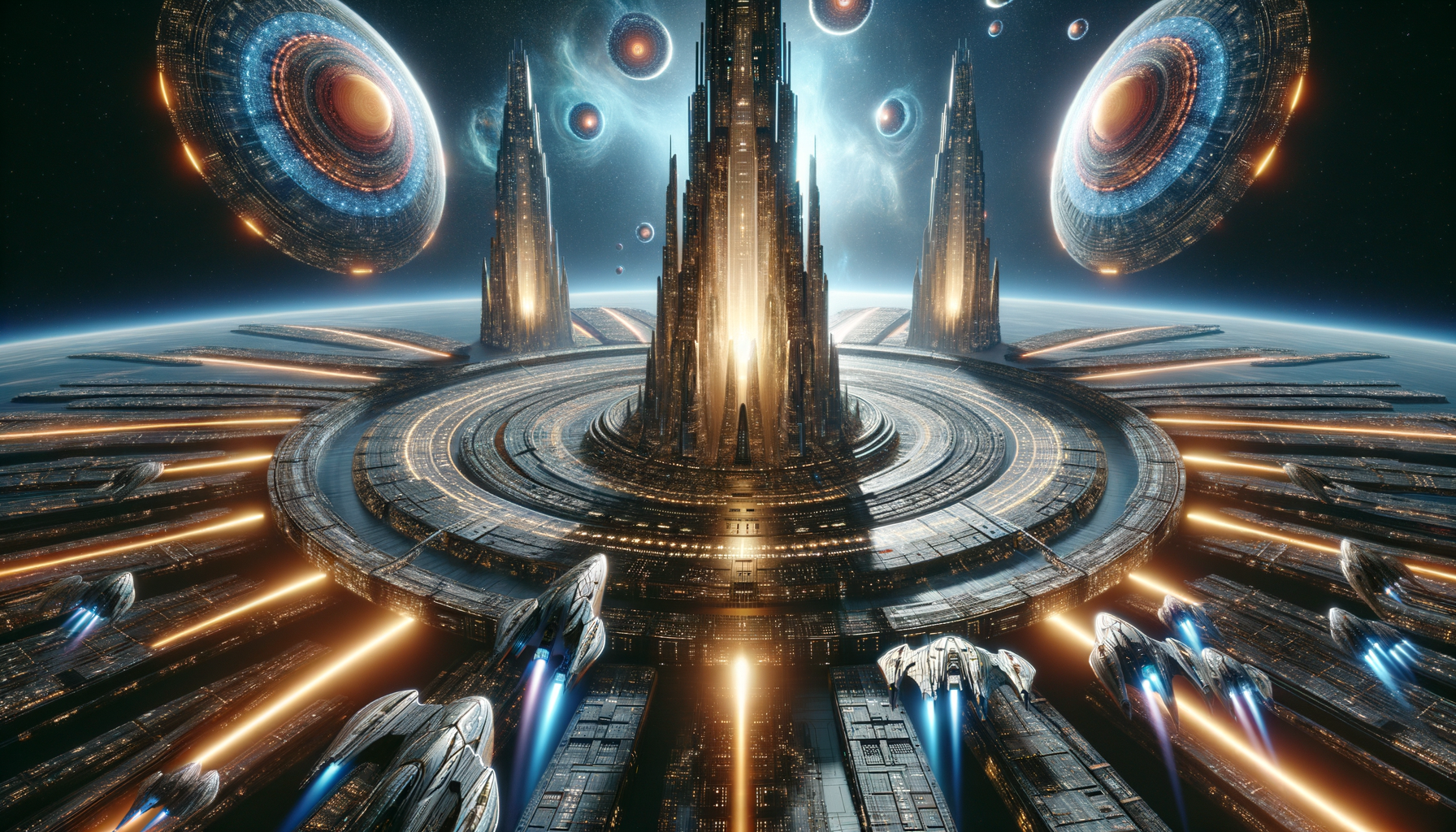
Scattered across thousands of star systems, the Beacon mesh network is the most significant piece of technology ever discovered. Each Beacon is a massive orbital structure — part antenna, part computer, part gateway — that enables instantaneous communication and energy transfer across interstellar distances.
No one knows who built them. No one knows when. But every spacefaring civilization in the known galaxy owes its existence to the network.
The Builders: A Vanished Civilization
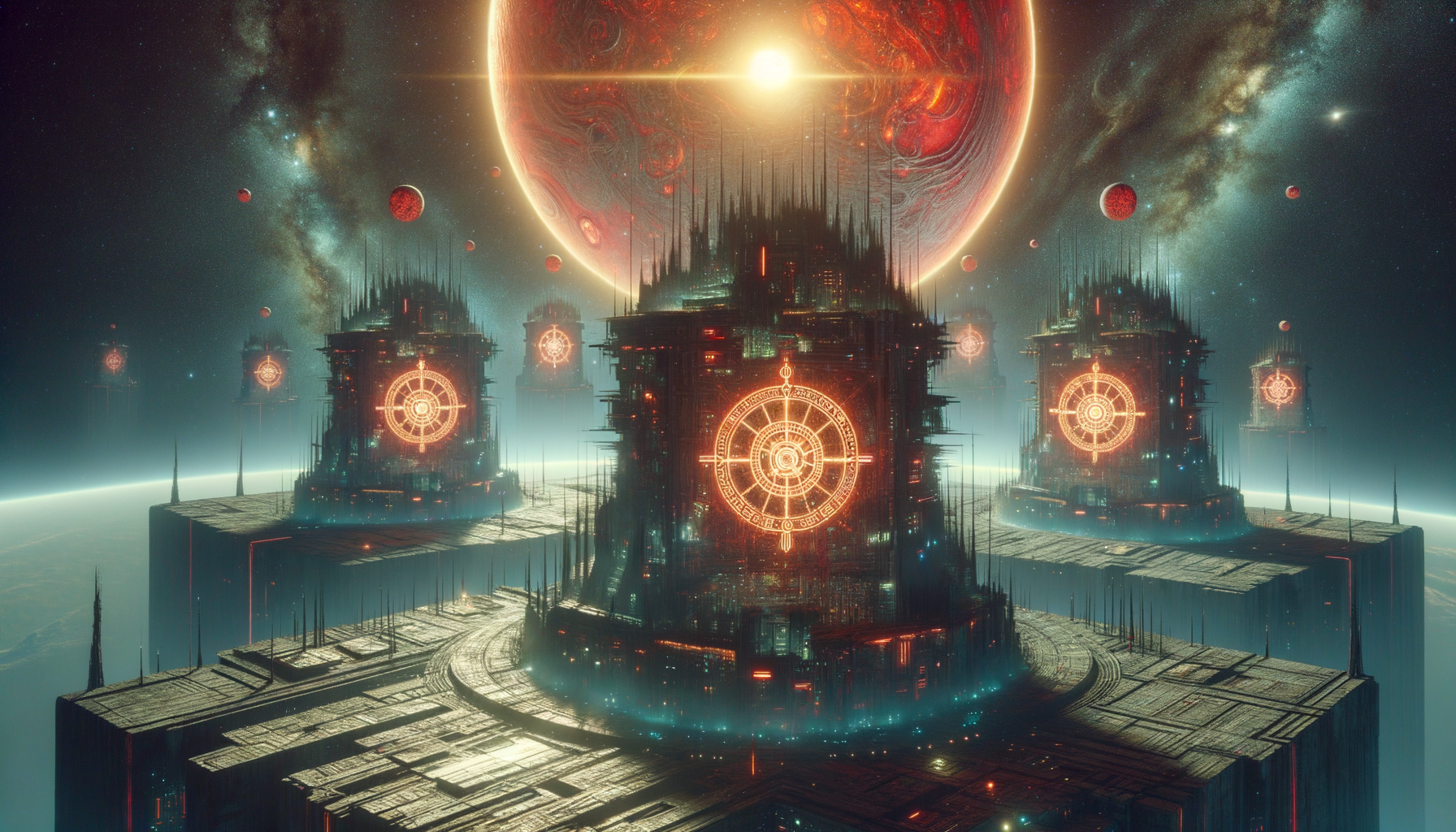
The species that constructed the Beacon network left almost no evidence of their existence beyond the Beacons themselves. Researchers have catalogued a few key facts:
- Age: Carbon dating of Beacon structural materials suggests construction at least 2 million years ago
- Material: Beacons are built from an alloy that doesn't appear on any periodic table — dubbed "Beaconium" by Terran scientists
- Self-repairing: Beacons maintain themselves through unknown mechanisms; damaged sections regenerate over decades
- No bodies, no art, no text: Whatever built the network left nothing personal behind
"We found their greatest achievement but not a single fingerprint. That's either the most disciplined cleanup in history, or they were never here physically at all." — Dr. Elara Voss, Xenoarchaeologist
Theories on the Builders
| Theory | Proponent | Evidence |
|---|---|---|
| Transcendence | Terran Academy | Builders "uploaded" into the network itself |
| Extinction | Caxion Hive-Council | Builders were consumed by their own creation |
| Migration | Vrynn Scholars | Builders left this galaxy entirely |
| Simulation | Aught Collective | Beacons are nodes in a reality-computing mesh |
The Five Factions
When the Beacon network was rediscovered by modern civilizations, the race to control it began. Five major factions emerged:
Terran Dominion
Homeworld: Earth (Sol-3)
Philosophy: Military structure, hierarchical command, industrial might
Beacon strategy: Fortify and hold — Terrans build permanent bases around captured Beacons
Caxion Swarm
Homeworld: Cax Prime
Philosophy: Collective consciousness, biological adaptation, sacrifice for the hive
Beacon strategy: Overwhelm with numbers — Caxion floods contested Beacons with expendable drones
Vrynn Ascendancy
Homeworld: Vrynn Nexus
Philosophy: Psionic mastery, knowledge hoarding, ancient wisdom
Beacon strategy: Manipulation — Vrynn uses psionic abilities to disrupt enemy operations
Haegori Empire
Homeworld: Unknown (nomadic)
Philosophy: Honor-bound warriors, ritualistic combat, ancestor worship
Beacon strategy: Duel for dominance — Haegori challenges enemy champions to ritual combat
Aught Collective
Homeworld: Digital (exists within networks)
Philosophy: Pure logic, digital consciousness, efficiency
Beacon strategy: Infiltrate — Aught attempts to interface directly with Beacon systems
Why Beacons Matter
Beacons aren't just communication relays. Controlling a Beacon grants access to:
- Instant communication — messages traverse the network at superluminal speeds
- Energy tapping — Beacons can channel stellar energy across light-years
- Navigation data — the network maps gravitational anomalies and safe routes
- The Archive — fragments of Builder knowledge stored within each Beacon's core
The more Beacons a faction controls, the more powerful their civilization becomes. This is why every conflict in the B3KN universe ultimately comes down to Beacon control.
The Card Connection
Every card in B3KN represents a unit, technology, or tactic from this universe. When you build a deck and play Beacon Defense, you're experiencing a small-scale version of the larger conflict — defending a single Beacon from waves of enemies trying to seize control.
Your cards aren't just game pieces. They're soldiers, scientists, drones, and weapons from a universe where the stakes couldn't be higher.
Want to join the fight? Play Beacon Defense or browse the card database to explore the factions.